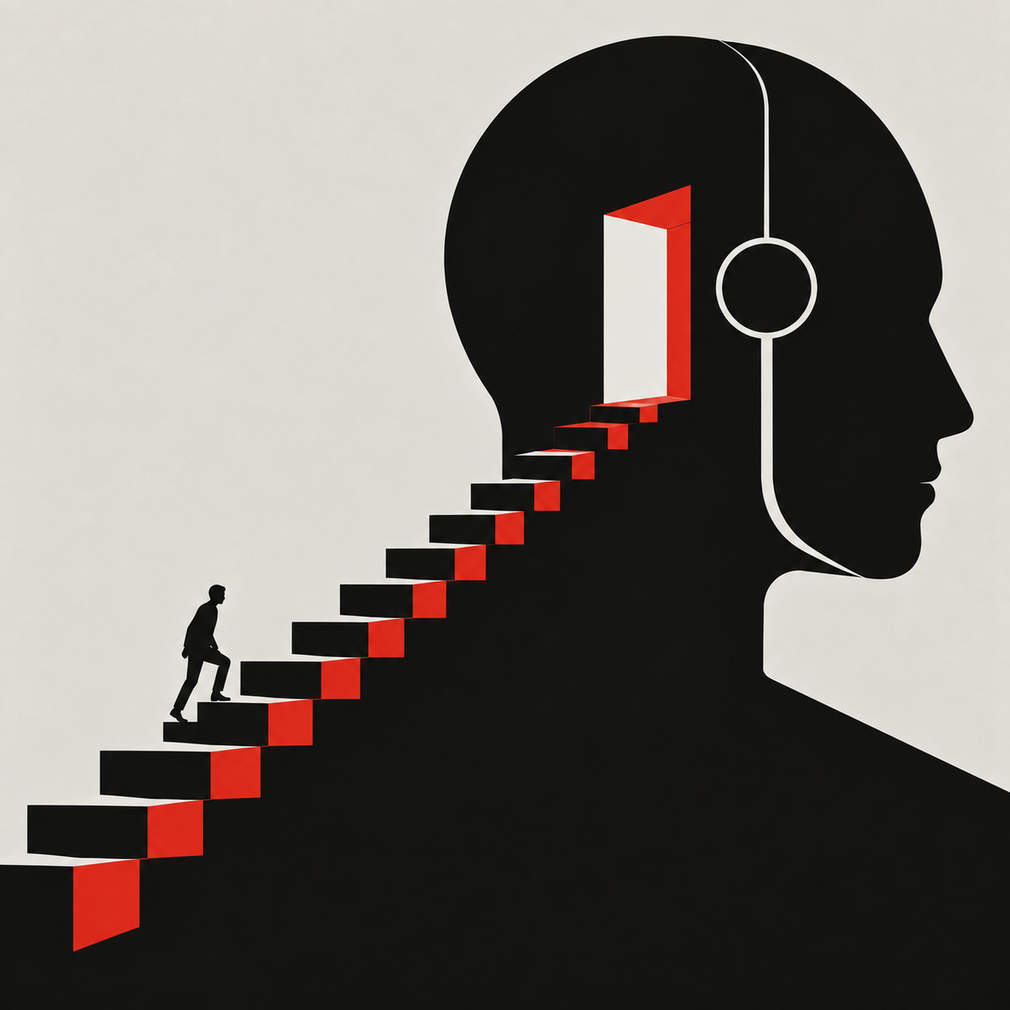
 AI is not coming for your job. Something stranger is happening: people are learning to depend on it.
Every email they stop writing, every problem they stop working through, every thought they ask a model to finish makes the next handoff easier. Skills rarely vanish because someone takes them away. They fade because they are no longer practiced.
I've been around computers long enough to remember when their limitations were physical. On machines built around a 6510 or a Z80, wasted instructions had visible consequences. Memory was small, processors were slow, and getting more from the machine meant understanding it better. The demoscene turned those constraints into an art form, squeezing music, graphics and whole worlds into spaces that seemed too small to hold them.
The abstractions kept growing. Personal computers, networks, databases, search engines and broadband all answered pressures that already existed. We needed more computation, better communication, more storage and better ways to find what we had created.
With large language models, the order feels different. The capability arrived first.
There was no shortage of text in 2022. Programmers were already producing enormous amounts of code. Researchers were not waiting for more plausible paragraphs. Then the models appeared, and we began finding places to put them. Chat boxes spread through products, companies reorganized workflows, universities wrote policies and datacenters expanded.
Once enough infrastructure exists, adoption creates its own logic. People get used to a capability, companies build around it, and soon its absence feels like a deficiency. The dependency becomes real even if the original need was vague.
The attraction is easy to understand. An LLM has an almost perfect interface: say what you want and something useful often comes back. A calculator calculates, a compiler follows rules, a database has structure. An LLM accepts almost anything.
That generality changes habits. When one interface can write, summarize, explain, search and code reasonably well, more precise tools begin to feel inconvenient. Reading documentation feels slower. Searching carefully feels slower. Working through a problem feels slower.
That matters because some kinds of slowness were doing useful work.
Large language models have made generation cheap. Text, code, summaries, tests and explanations can appear in seconds. Judgment remains expensive.
A fabricated API call takes moments to produce and much longer to debug. A false citation can look convincing. Generated code can grow faster than anyone can properly understand it. Fluency makes the problem harder because errors arrive looking finished.
Programmers already know this distinction. Typing code was rarely the difficult part. Understanding the system, choosing the right abstraction, seeing the edge cases and knowing what can safely change were always harder. The same is true elsewhere. Producing words is only part of writing. Producing an answer is only part of understanding.
The model accelerates the visible output while leaving the difficult part largely where it was.
There is a deeper cost, and it is easy to miss because it does not appear in a productivity metric. Some work is valuable partly because doing it changes the person.
A programmer learns by debugging. A writer develops taste by producing bad sentences and later understanding why they were bad. A scientist builds judgment through failed hypotheses. A student learns by staying confused long enough for something to become clear.
Those experiences are inefficient. They are also how competence forms.
This is why mediocre AI output concerns me less than good-enough output. Bad output forces attention. Good-enough output can end the process before much thinking has happened.
No dramatic decision is required. A shortcut becomes normal, then another. The machine drafts, explains, searches, implements and corrects. The person gradually moves from making to reviewing, then from reviewing to approving.
Eventually, doing the work directly starts to feel unusually difficult. Nothing was taken. The ability simply stopped being exercised.
The same thing can happen to ideas.
LLMs are very good at turning unfinished thoughts into familiar shapes. Sometimes that is useful. But an unfinished thought is not always a problem waiting to be cleaned up. Some ideas need time before they become clear. They need contradiction, boredom, failed attempts and silence.
Instant coherence can end that process too early. A rough idea becomes a polished paragraph before it has had the chance to become an interesting one.
That may be the most important thing to preserve: the period before the answer, when the mind is still doing work that cannot yet be summarized.
These systems are useful. That was never the difficult question.
The difficult question is what happens when convenience becomes habit, and habit becomes dependency. Computers extended what we could calculate. Networks extended who we could reach. Search engines extended what we could find. Large language models reach into the process by which effort becomes understanding.
That deserves more attention than another argument about whether AI will replace jobs.
Skills usually fade quietly. They disappear through disuse, one reasonable decision at a time, until something that once felt natural becomes difficult without assistance.
No machine has to take that from us.
We can hand it over ourselves.
The Dependency Machine
How we built dependence and mistook it for necessity